
Lest We Forget


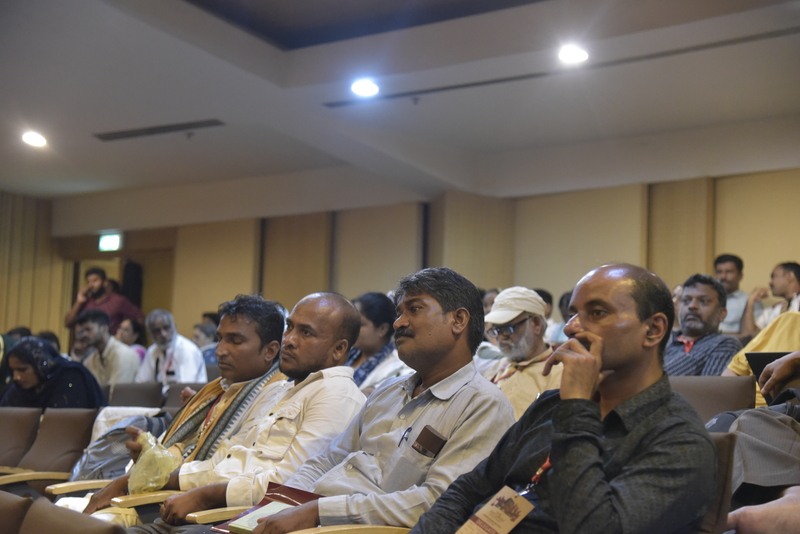


National People’s Conclave
Overview
Crises have historically been moments of rupture. They unsettle established arrangements and create openings through which political, institutional and social shifts become possible. But what happens when a crisis is no longer an interruption to the ordinary, and instead becomes a condition of the ordinary?
The pandemic as a crisis has been identified, reported and named by people’s organisations across the world. Governmentality can introduce control and containment as solutions to crises, making the crisis itself appear ordinary. When a crisis becomes ordinary, however, the question of what is happening to people, and what is owed to them, risks becoming ordinary too. Questions of reparation, restitution and accountability therefore require us to return to examining the crisis as a disruption to the already precarious everyday life lying firmly within the realm of injustice.
It is from this need that PC-PIC introduced the National People’s Conclave, an attempt to rethink the very idea of a conclave as a space constituted not only by bureaucrats, institutional representatives or designated experts, but by people themselves. A forum where people’s stories as truth become the basis for collective inquiry and design: to ask what must be repaired, what must be restituted, who must be held accountable, and what forms of change are necessary.
Public Hearings
The search for reparations, accountability, and restitution began with individual documentation of pandemic and post-pandemic India through case studies, COVID FIRs – developed by PC-PIC as a tool to formally document cognizable offences drawing on the legal justice framework – and individual inquiries into what went wrong. Community members proposed bringing these individual experiences together, recognising that my issue is their issue. It is from this community-led proposition that the public hearing emerged as a site of inquiry.
Public hearings are vital to the PC-PIC process. They act as democratic spaces where experiences of people’s lived truths often omitted by design from official accounts are brought to the fore. Here, communities speak about their experiences on record, ask questions, and demand responses and accountability from the systems that continue to shape their lives. The essence of this exercise lies in its intent to register and record these invisibilised people’s truths and, through it, to demand accountability from those responsible for manufacturing and sustaining precarity as the norm in the everyday lives of people— the citizens.
The hearings have brought together communities facing different forms of injustice, ranging from loss of livelihoods and displacement to denial of healthcare, rights violations, and institutional neglect. While the issues and communities vary, the common purpose of these public hearings is to create a public record of people’s experiences and use that record to ask questions of those responsible.


Exhibition
And We Clapped?
An exhibition on five years since COVID-19 and the lockdownPandemic memory does not exist only in testimonies, reports, and statistics. It was also lived through images, grief, care, work, isolation, and resistance. This need to preserve public memory gave rise to And We Clapped? And We Clapped? was an exhibition about memory, but also about what lies behind those memories. Bringing together select works from a wide range of artists, the exhibition formed an important part of the National People’s Conclave’s larger attempt to document the pandemic and its aftermath.
Through the work of cartoonists, illustrators, and photojournalists, the exhibition reflected on the pandemic’s aftermath, grief, care, resilience, and resistance. The works gathered were not simply illustrations of the pandemic. They are part of its record. A way of preserving public memory: experiences that official statistics and government timelines won’t show.
Community Meetings
Community meetings and workshops are where PC-PIC begins to work through an issue with a community. They create space for people to bring together experiences that are often treated as separate or individual, identify what they have in common, and ask what lies behind them. These discussions help shape the inquiry itself: what needs to be documented, which questions need to be pursued, whose experiences need to be brought into the record, and what further evidence is required. Depending on the context, this may lead to interviews, case studies, COVID-FIRs, surveys, or other forms of documentation. The emphasis is on building the inquiry with the community rather than arriving with a fixed set of questions. The information generated through these meetings forms part of the evidence used to understand wider patterns of institutional failure, rights violations, livelihood loss, exclusion, and other forms of distress.
Training of Trainers (ToT) Workshops
ToT workshops enable people within communities to undertake this work themselves. PC-PIC uses Participatory Action Research (PAR) to train grassroots researchers, community organisers, and volunteers in the skills and processes required to investigate issues affecting their own communities. Rather than positioning the community as the subject of research, PAR treats community members as participants in producing knowledge about their own circumstances. Training covers practical research skills such as developing questionnaires, conducting interviews and focus group discussions, collecting and organising data, writing case studies, and analysing findings. Participants also learn how to approach research ethically and carefully, distinguish individual accounts from broader patterns, and ensure that the evidence remains rooted in community knowledge. The aim is not simply to create better data collectors. It is to build the capacity of communities to ask their own questions, generate their own evidence, interpret what that evidence reveals, and use it to pursue further inquiry and action. In this way, ToT workshops help build a wider network of community researchers who can carry participatory research beyond a single PC-PIC intervention.


